Are you NOT paying with Paypal? Perfect...Use DISC005 in your shopping cart to get -5% discount. Do not use this if you are paying with Paypal!
The British Way: Enemy of My Enemy
€55,99
Price incl. btw (21%) €9,72
The British Way: Enemy of My Enemy by GMT Games COIN series
In stock
1
Save this product for later
The British Way: Enemy of My Enemy
Product Details
From the Publisher:
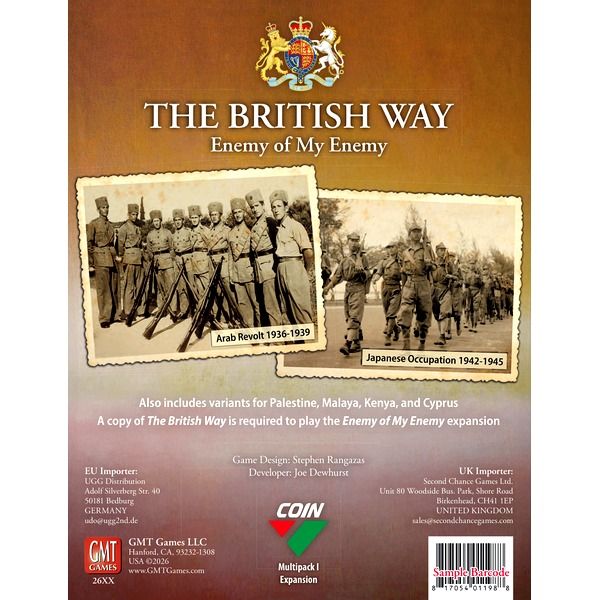
The British Way: Enemy of My Enemy is an expansion for The British Way, including two entirely new games on “prequel” conflicts using the Malaya and Palestine maps and expanding the base game experience with new variants for all four conflicts originally covered. The British Way: Japanese Occupation puts the British and the Malayan Communist Party (MCP) on the same side in their efforts to resist the Japanese occupation of Malaya during World War II. The British Way: Arab Revolt allows players to explore the brutal suppression of the Arab Revolt (1936-1939) that preceded the Jewish insurgency covered by the original Palestine game. The two new games involve entirely new mechanics to capture the unique features of each conflict and can each be linked to the original Palestine and Malaya games, which also allows them to feed into the “End of Empire” Campaign Scenario. The two new games in the expansion allow players to explore how British attempts to combat earlier threats to colonial rule involved collaborating with local armed groups that they would later end up fighting against (Jewish paramilitary groups in Palestine and the MCP in Malaya), ironically strengthening and preparing these groups for two of the conflicts featured in the The British Way.
Highlights
- Two full games in one expansion: Explore two entirely new games, reusing the maps and wooden components from the base game but otherwise completely mechanically distinct from Palestine and Malaya. As with all multipack games, these two new games will include their own Pre-War Option Tables and Faction Personas, and they can also be played as prequels to their companion games from the original multipack.
- New variant rules and components for each of the four original games: New rules for Lehi in Palestine, Jungle Bases and SAS in Malaya, Detention and Leaders in Kenya, and TMT/Volkan (Turkish insurgents) in Cyprus.
- New player aids for the InsideGMT “Advanced Cyprus” and “Faction Persona” variants: Updated materials for those owning the original 2023 printing of The British Way.
Arab Revolt
The British Army’s crushing of the Palestinians was of greatest benefits to the Jews. Not only did the Army scatter rebel bands but it left the rural populace impoverished by the counter-insurgency and without the strength for another round of fighting in 1948.
- Historian Matthew Hughes on the 1936-1939 Arab Revolt
The British Way: Arab Revolt utilizes the Palestine map to model the Palestinian Arab revolt (1936-1939) that preceded the Jewish insurgency (1945-1947) covered in the base game. I’ve always considered the Arab Revolt an essential addition for understanding the conflicts covered in The British Way for two reasons. First, the British refined the coercive population control measures later seen in Malaya and Kenya during this conflict, particularly during the last stages where the British forces escalated violence against the civilian population to bring a rapid end to the revolt and free up troops for the looming war in Europe. Second, several players have noticed an absence of Palestinian representation in The British Way: Palestine. As reflected in the quote above, severe British repression during the 1936-1939 revolt exhausted the Palestinian community, leading Jewish armed groups such as Irgun to view Britain as their primary opponent during the Jewish insurgency era covered by the original Palestine game. After achieving British withdrawal, during the subsequent 1947-1948 conflict Jewish groups also had an advantage over Palestinians due to this same exhaustion. Therefore, the Arab Revolt is crucial for understanding both the evolution of British counterinsurgency and the lasting conflicts in the region that continues to the present day.
Mechanically, the Arab Revolt game focuses more on rural District spaces, rather than the City spaces that are crucial in the Palestine game. In addition, several spaces marked “Out of Play,” such as Syria and Transjordan, become playable in the new game. The Arab Rebels are more akin to the rural insurgents featured in Malaya and Kenya than the clandestine Cell Factions of Irgun and EOKA but suffer from disunity within their movement. The Arab Rebels interact differently with the Initiative Track and are forced to manage a new “Coordination Track.” The British gain access to Irregular pieces representing Jewish Special Night Squads and Arab “peace bands” and new mechanics for collective punishments covering the extensively used punitive fines, house demolitions, and detentions.
Japanese Occupation
These forced resettlements call to mind the new villages created by the British army in the late 1940s and 1950s. There is no direct evidence that the British army used the model provided by the Japanese army. However, Malayan Chinese deported by the British authorities in 1950 wrote that the “subjugation bases” of the British were modelled on the “pacification policy” of the Japanese.
- Historian Hara Fujio on Japanese and British policy in Malaya
The British Way: Japanese Occupation utilizes the Malaya map to model the Japanese occupation of Malaya during World War II (1942-1945) that preceded the Malayan Emergency (1948-1960) covered in the base game. Although this game does not directly fit the The British Way’s central theme of comparatively exploring the coercive side of British counterinsurgency, I wanted to include a game on this topic for several reasons. First, although there are many great wargames on the major conventional campaigns of World War II, including on the fall of Malaya and Singapore, there are far less games focusing on the realities of occupation, particularly for countries outside of Western Europe (Brian Train’s upcoming COIN game, China’s War, being a major exception). By featuring Japanese repression and resource extraction, players will hopefully gain a more diverse view of World War II that shifts attention away from “great battles” and “squabbling generals” to the consequences of the war. In addition, British efforts to support armed opposition to the Japanese occupation through their Force 136 strengthened the Malayan Communist Party (MCP), the most effective resistance group, setting up their post-war confrontation featured in The British Way: Malaya.
Mechanically, The British Way: Japanese Occupation features a new approach to victory conditions compared to other multipack games and new mechanics to cover Japanese counterinsurgency techniques such as the use of Kempeitai secret police units. The Japanese must extract and transport as many resources as possible from Malaya to support the broader war effort while containing the resistance movements. The resistance movements must sever new railway pieces, collect intelligence for Allied forces, and build up their forces to challenge Japanese occupation. If linking into a game of The British Way: Malaya, the British must also consider how much to build up the resistance forces, knowing that those same forces will likely be used to resist British rule after the war.
New Variants
The four new variants for the original four games featured in The British Way add additional strategic complexity and historical accuracy for those familiar with the base game dynamics. The expansion also includes new versions of a few base game Event cards for each game to ensure the new variant mechanics are fully integrated into the gameplay.
- Lehi (Palestine): New Lehi Cells operating outside of the control of the Irgun player may augment Terror rolls and place their own Sabotage but also attract British Mass Detention and offer the British a new way of accumulating Political Will.
- Jungle Bases and SAS (Malaya): The largest of the four variants includes new Jungle Base and SAS counters alongside four completely new Malaya Event cards. Jungle Bases make the MCP guerrillas harder to root out from Provinces unless the British deploy SAS Squadrons! This variant fleshes out the “Extended Malaya” Option with additional Event cards and offers a slightly longer and more involved gaming experience than other The British Way games.
- Detention and Leaders (Kenya): The Mau Mau gain new leader counters for Dedan Kimathi and Waruhiu Itote, augmenting their Raid Special Activity and representing the leadership of the Kenyan Land and Freedom Army (KLFA) operating out of the Mountain Jungles. In addition, the British gain a new Detention Deck that replaces Pipeline Outrage Rolls and further highlights the brutality of the British detention system in Kenya.
- TMT (Cyprus): New mechanics place blue Cells representing Turkish groups (TMT and Volkan) that present both an opportunity and, mostly, a hindrance for the British player. When TMT Cells activate, they may remove EOKA Cells but also place Sabotage markers, representing intercommunal violence encouraging the British to withdraw.
Components:
- Two 35-card Game Event Decks
- 26 Variant Cards
- Six Wooden Pieces
- 10 Double-sided Player Aids
- One Countersheet
- Two Rules/Background Booklets
- One Campaign/Variants Booklet
Number of players: 2
Game Designer: Stephen Rangazas
Game Developer: Joe Dewhurst
Series Developer: Jason Carr
Expand your tactical operations and dive into critical historical prequels with The British Way: Enemy of My Enemy, a gripping asymmetric wargame expansion from GMT Games. Designed strictly for 2 players with a quick-flowing 60 to 120-minute playing time, this box explores the political ironies and strategic blowback of colonial rule.
Utilizing the core mechanics of the highly acclaimed COIN series multipack system, Enemy of My Enemy introduces two entirely new prequel conflicts that reuse the base game maps with completely distinct operational goals.
Historical Setting & Themes of Empire
The British Way: Enemy of My Enemy serves as a vital historical expansion to GMT Games' groundbreaking COIN multipack system. In this module, designer Stephen Rangazas turns back the clock to explore the volatile, complex prequel eras that set the stage for the original game’s mid-century decolonization struggles. The primary thematic anchor here is strategic blowback. Players dive deep into historical settings where British imperial forces actively collaborated with local paramilitary groups to tackle an immediate threat, inadvertently training, arming, and preparing those exact same organizations to fight against the Crown just years later.
Two Unique Prequel Games
This expansion acts as two standalone simulations wrapped inside one package, leveraging the existing maps and wooden components from the base box:
- The Arab Revolt (1936–1939): Transitioning away from the urban gridlock of the Palestine module, this campaign focuses heavily on controlling the rural District spaces. It documents the harsh population control methods utilized by the British before the outbreak of World War II, bringing previously locked regions like Transjordan and Syria directly onto the active map.
- The Japanese Occupation of Malaya (1942–1945): A massive mechanical twist for the COIN system, this scenario places the British and their eventual bitter rivals—the Malayan Communist Party (MCP)—on the exact same side.
Players must work in uneasy tandem to disrupt, sabotage, and survive the overpowering Axis occupation forces during World War II.
Core Gameplay & Advanced Mechanics
At its heart, the gameplay relies on a streamlined, fast-paced two-player execution of the classic COIN (Counterinsurgency) mechanics. Rather than dragging out over a full afternoon, each game plays within a brisk 60 to 120 minutes.
Beyond the two main prequel campaigns, Enemy of My Enemy drastically boosts the modularity of the base game. Veteran commanders can integrate new variant rules directly into the four original conflicts. Deploy elite SAS Squadrons and hidden Jungle Bases in Malaya, manage structural Detention centers and political Leaders in Kenya, or unleash clandestine insurgent cells like the Lehi in Palestine and the Turkish Volkan factions in Cyprus.
Replayability & Campaign Integration
The tactical longevity of this box shines in its structural campaign integration. Both prequel modules can be chained directly into their corresponding base games, creating an overarching "End of Empire" Campaign Scenario.
BOARDGAMEGENERAL ADVICE
Expert Recommendation
The British Way: Enemy of My Enemy is an outstanding expansion designed specifically for intermediate and veteran strategy gamers who already own the base box and want to add significant historical and mechanical depth to their sessions.
The primary strength of this expansion lies in its creative design philosophy. The Japanese Occupation module offers a rare, fascinating look at co-op/semi-cooperative dynamics between future combatants inside a system usually defined by pure friction. Additionally, the inclusion of SAS assets, Jungle Bases, and clandestine splinter cells injected into the original maps breathes incredible new life into the base material.
The only minor drawback is the baseline requirement: this is not a standalone product, meaning a copy of The British Way: Counterinsurgency at the End of Empire is absolutely mandatory to utilize these contents.
Verdict: An absolute must-buy for COIN series enthusiasts looking to bridge the geopolitical gaps of mid-century conflicts with brilliant asymmetry and exceptional narrative tension.
You May Also Like
Labyrinth (5th Edition)
Labyrinth (5th Edition)
A card-driven 1-2 player strategy game about the global war on terror after 2001.
€63,99
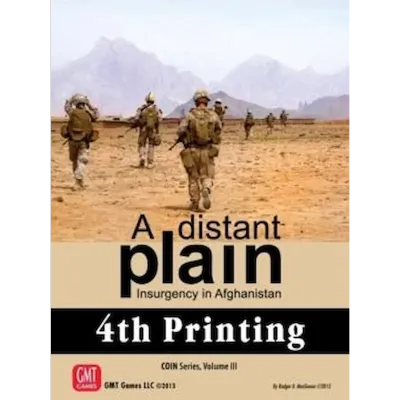
A Distant Plain (4th Printing)
A Distant Plain (4th Printing)
A COIN series game of modern insurgency and political conflict in Afghanistan.
€79,99
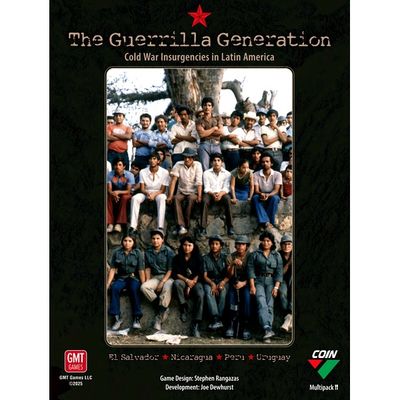
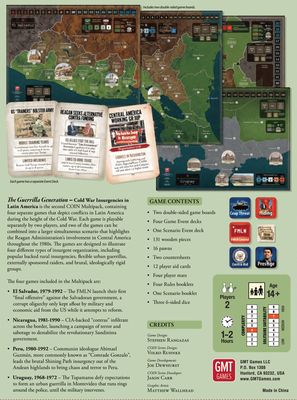
The Guerrilla Generation COIN Multipack
The Guerrilla Generation COIN Multipack
The Guerrilla Generation COIN Multipack by GMT Games
€94,99
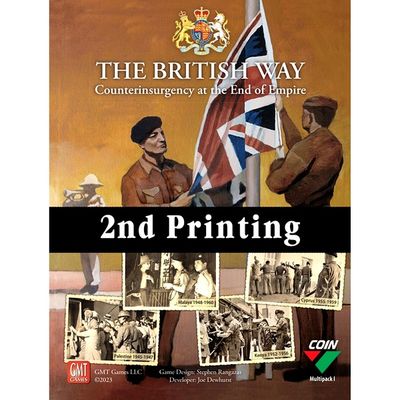
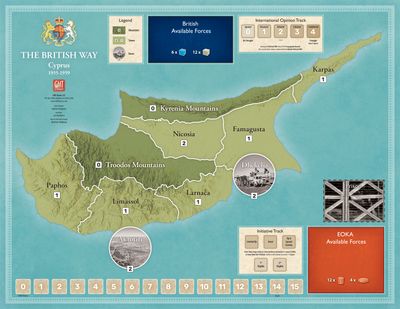
The British Way: Counterinsurgency at the End of Empire 2nd Printing
The British Way: Counterinsurgency at the End of Empire 2nd Printing
The British Way: Counterinsurgency at the End of Empire 2nd Printing
€92,99
Display prices in:EUR