Are you NOT paying with Paypal? Perfect...Use DISC005 in your shopping cart to get -5% discount. Do not use this if you are paying with Paypal!
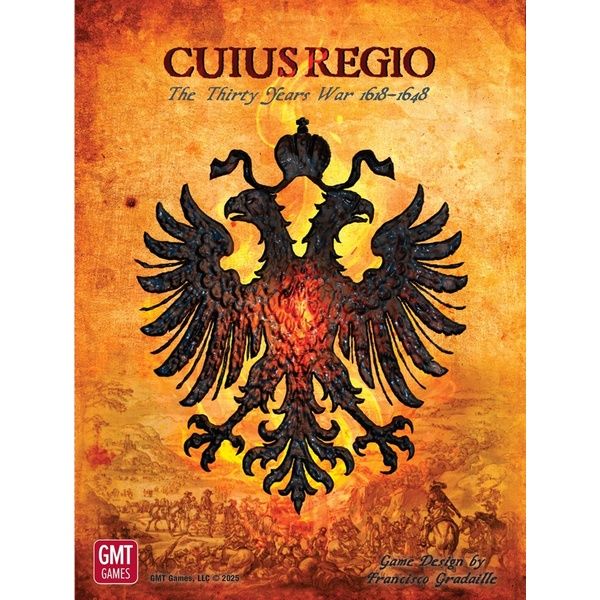
Cuius Regio: The Thirty Years War
€59,99
Price incl. btw (21%) €10,41
Cuius Regio: The Thirty Years War by GMT Games
In stock
1
Save this product for later
Cuius Regio: The Thirty Years War
Product Details
From the Publisher:
"War is our homeland, our hauberk is our house."
—Attributed as a Soldiers' saying from the Thirty Years War
In May 1618, two imperial regents of the Habsburg Empire, along with their secretary, were thrown from the window of the council room in Prague Castle for violating an agreement that protected Protestant religious rights. The act, known as the Defenestration of Prague, marked the beginning of 30 bloody years of warfare— the Thirty Years War.
Cuius Regio explores the operational military aspects of this pivotal period in European history and focuses on the maneuvers and battles that shook Europe for three decades.
The Thirty Years War unfolded in four main phases: the Bohemian Revolt from 1618 to 1625, the Danish intervention from 1625 to 1630, the Swedish intervention from 1630 to 1635, and the French intervention from 1635 to 1648. It concluded with the Peace of Westphalia in 1648, which finally established a new status quo in Europe, the concept of the sovereignty of states, and shifted the focus of continental politics from southern Europe to the northern states.
Although much of the focus of the period revolved around the diplomatic, religious, and political activities of the many factions involved, the military operations had a devastating impact on the economic and social well-being of the people across much of the continent.
This was in large part because the Thirty Years War, particularly in the Holy Roman Empire, was mainly a war of maneuvering. Armies moved to gain, or regain, control of territory, influence negotiations, or convert the people. Because the armies often contained a large number of mercenaries and supply systems were rudimentary, this resulted in widespread devastation and frequent sieges. Sieges, however, were usually short and resolved by a quick surrender in hopes of avoiding a brutal sacking (since most logistics were managed by sacking towns, pillaging regions, and disbanding troops).
Through the period, Europe saw the consolidation of national armies, artillery become an indispensable part of the battlefield, and pikemen almost disappear. Still, the armies stayed technologically matched as weaponry on both sides advanced at a similar pace. In the end, tactical innovations and leadership made the difference on the battlefield.
Gameplay
In Cuius Regio, Designer Francisco Gradaille and developer Mike Sigler have created a game that is easy to learn but difficult to master. Players have the freedom to apply their creativity to a range of maneuvers and operations possible to the armies of the period.
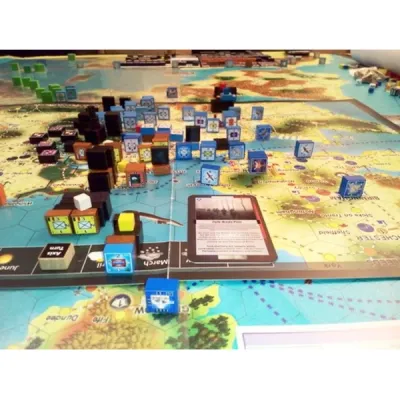
For two players, Cuius Regio is played on an operational-strategic scale. Each turn covers one year, and each hex is approximately nine miles across. Infantry and Cavalry strength points represent approximately 1000 men each, and an Artillery strength point is approximately five guns. Each leader has a Leadership Rating that affects how many troops he can lead and his effectiveness as a leader. Players maneuver their leaders and their armies around Central Europe, conquering cities, engaging in battles, gathering supplies, and preparing armies for yearly campaigns to gain control of the cities of the Holy Roman Empire.
The game includes scenarios covering the Bohemian Revolt, the Danish intervention, the Swedish intervention, the French intervention, and a Thirty Years War campaign of 31 turns lasting from 1618 to 1648. Each scenario has a unique character, and the game can be played in as little as an hour and a half (for a short scenario) or can be a multi-session game for the full campaign.
The turns are divided into two seasons (summer and winter), and each turn has a variable duration that depends on the number of armies activated. In addition, armies can conduct operations several times but become less effective as they accumulate fatigue during each action.
Combat is an integrated system for field battles and sieges and is resolved by a die roll, modified by each army's leadership, composition, and condition, on a simple Battle Results Table.
Players: 2
Age: 14+
Game Scale: A turn is one year, each Strength point represents approximately 1000 men, or five guns; and a hex on the map is about sixteen miles across.
Playing Time: Scenarios play in 1-6 hours and the full campaign in 30-40 hours.
COMPONENTS:
- 34” x 33” Map
- Four Counter Sheets
- Two Player Screens
- Four Player Aid Cards
- Two Force Mats
- Rule Book
- Scenario Book
- Three Dice
Designer: Francisco Gradaille
Developer: Mike Sigler
Immerse yourself in the devastating conflict that reshaped Central Europe with Cuius Regio: The Thirty Years War, an authoritative operational-level wargame from GMT Games. Designed by Francisco Gradaille for 1 to 2 players, this deeply strategic experience features a flexible playing time ranging from 60 minutes for introductory scenarios up to 6 hours or more for the sweeping full campaign.
Stepping into the shoes of Imperial or Protestant commanders, players must master the nuances of 17th-century maneuver warfare, supply logistics, and siege tactics across the Holy Roman Empire. Balancing infantry strength points, cavalry wings, and heavy artillery trains, Cuius Regio beautifully blends historical accuracy with a highly interactive, action-driven game engine. It is a masterpiece of operational theater, perfect for history buffs and serious hex-and-counter enthusiasts looking to rewrite European destiny.
The Crucible of 17th-Century Europe
Triggered by the historic Defenestration of Prague in 1618, the Holy Roman Empire was plunged into three decades of catastrophic, religiously fueled warfare. Cuius Regio: The Thirty Years War, published by GMT Games, captures the grand operational theater of this pivotal historical period. This dedicated hex-and-counter wargame abstracts the macro-political maneuvers to focus directly on the grueling, critical military campaigns, march logistics, and army management that defined the era.
Operational Scope and Strategic Map
The core gameplay unfolds across a beautifully rendered 34” x 33” map detailing the rugged, fortress-heavy landscape of Central Europe. Scales are precisely calculated: every hex represents roughly 16 miles, and each game turn represents one full year of historical time.
The game includes several standalone modular scenarios tracking the historical interventions of the conflict:
- The Bohemian Revolt (1618–1625)
- The Danish Intervention (1625–1630)
- The Swedish Intervention (1630–1635)
- The French Intervention (1635–1648)
- The Grand Campaign: An epic, 31-turn marathon that spans the entirety of the war from outbreak to the Peace of Westphalia.
Core Gameplay and Innovative Mechanics
Cuius Regio eschews standard, rigid turn structures in favor of a dynamic, variable operation system. Armies can be activated to conduct operations multiple times within a single turn; however, a brilliant diminishing returns mechanic dictates that the harder an army is pushed, the more fatigue it suffers, dropping its overall combat effectiveness.
The military composition features distinct infantry units (representing mixed formations of evolving pikemen and musketeers), swift cavalry forces, and heavy artillery train counters. Battles and complex sieges are seamlessly integrated, resolved using a centralized Battle Results Table (BRT) modified heavily by army condition, unit types, and individual commander leadership stats.
Why Players Enjoy This Wargame
Wargamers are drawn to Cuius Regio because it strikes a rare balance between authentic tactical depth and approachable rules overhead. With a rulebook spanning just over 20 pages, players can quickly internalize the engine without wading through impenetrable text.
The friction of supply lines and the absolute necessity of maintaining safe routes for mercenaries create a fascinating mental puzzle. While primarily a highly competitive 2-player game, the open operational framework and lack of hidden information blocks make it perfectly suited for solo play, allowing a single player to comfortably command both factions.
BOARDGAMEGENERAL ADVICE
As the resident wargaming experts at Boardgamegeneral, we are thrilled by what designer Francisco Gradaille has brought to the table. The Thirty Years' War has historically been a difficult era to model cleanly at an operational scale, but Cuius Regio handles it masterfully.
This game is ideally suited for intermediate wargamers and seasoned veterans. If you enjoy operational masterpieces like GMT's Bar-Lev or the No Peace Without Spain system, the operational push-and-pull found here will feel incredibly satisfying.
The biggest strength of this title is its flexible activation system. The choice of whether to push an exhausted army for one more vital siege or pull back to recover supply lines introduces agonizing, glorious tension to every single year of the campaign.
A potential drawback is its variable game length. While short scenarios can be knocked out in an evening, the full campaign is a multi-session project requiring a dedicated table setup. It is also not an introductory board game; newcomers to hex-and-counter movement may find the supply constraints punishing.
Verdict: An exceptional, highly focused operational wargame that belongs on the shelf of any dedicated military history enthusiast.
You May Also Like
Command & Colors: Medieval (2nd Edition)
Command & Colors: Medieval (2nd Edition)
A Command & Colors game of medieval battles with Eastern Roman and Sassanid armies.
€69,99
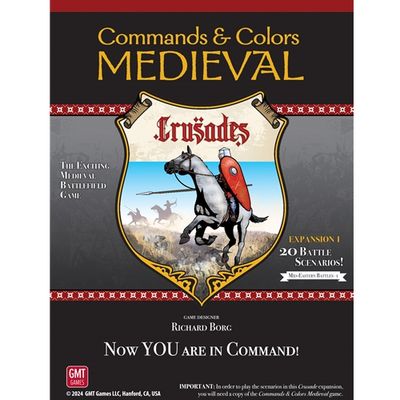
Command & Colors: Medieval – Crusades Expansion
Command & Colors: Medieval – Crusades Expansion
A Crusades-era expansion for Command & Colors: Medieval.
€62,99
Sold out
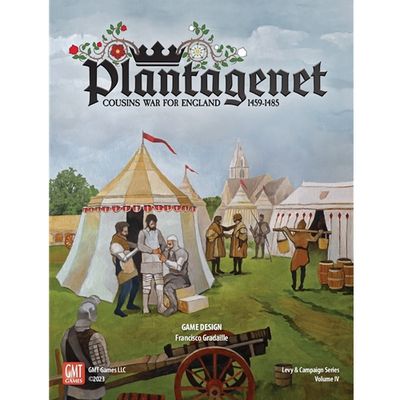
Plantagenet: Cousins’ War for England, 1459-1485
Plantagenet: Cousins’ War for England, 1459-1485
A Levy & Campaign game of politics, warfare, and shifting loyalties during the Wars of the Roses.
€69,99
Out of stock
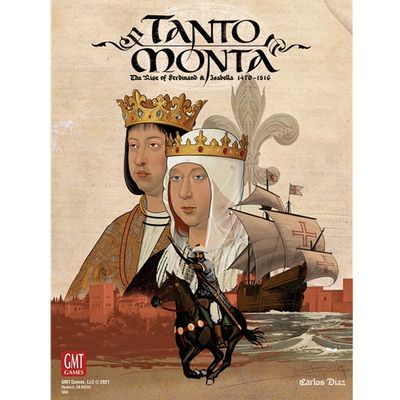
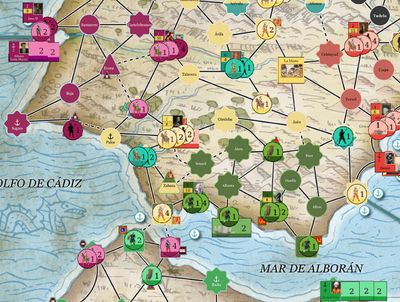
Tanto Monta: The Rise of Ferdinand and Isabella
Tanto Monta: The Rise of Ferdinand and Isabella
A 4-player strategy game of Iberian kingdoms, diplomacy, war, and early exploration.
€72,99

Purple Haze: Tunnel Rats Expansion
Purple Haze: Tunnel Rats Expansion
A standalone Purple Haze expansion with tunnel missions, new mechanics, events, weapons, and melee combat.
€26,99
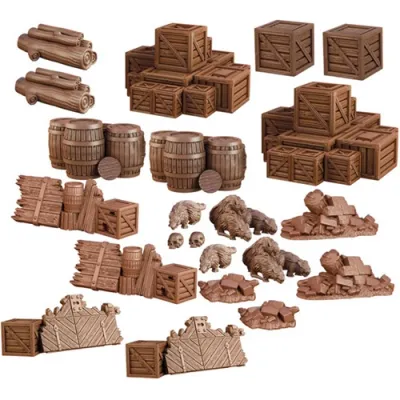
TerrainCrate: Dungeon Debris
TerrainCrate: Dungeon Debris
A TerrainCrate scenery set with dungeon debris and ruined details for fantasy battles and RPG encounters.
€26,99
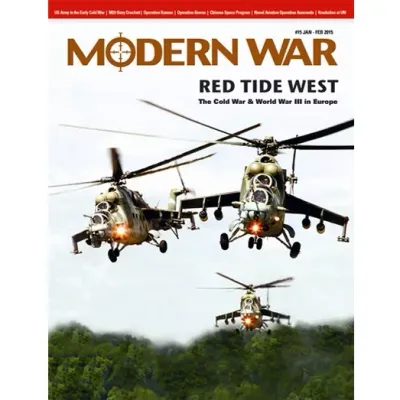
Modern War #15: Red Tide West
Modern War #15: Red Tide West
A Modern War magazine issue with a double-sized Cold War wargame on a Warsaw Pact invasion of West Germany.
€45,95
Sold out
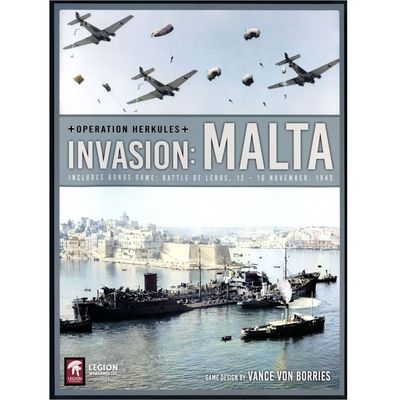
Invasion: Malta
Invasion: Malta
A two-player WWII wargame exploring possible Axis invasions of Malta in 1940, 1941, and 1942, plus Leros 1943.
€79,99
Out of stock
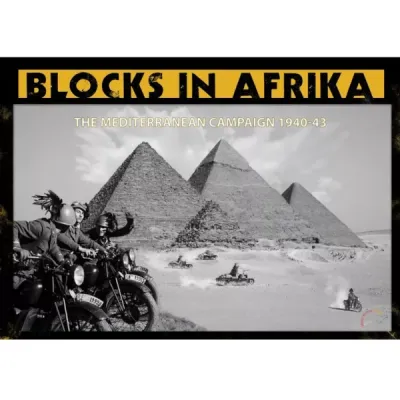
Blocks in Afrika
Blocks in Afrika
A two-player World War II block wargame covering the North African campaign and key Mediterranean naval battles.
€74,99
Display prices in:EUR