Are you NOT paying with Paypal? Perfect...Use DISC005 in your shopping cart to get -5% discount. Do not use this if you are paying with Paypal!
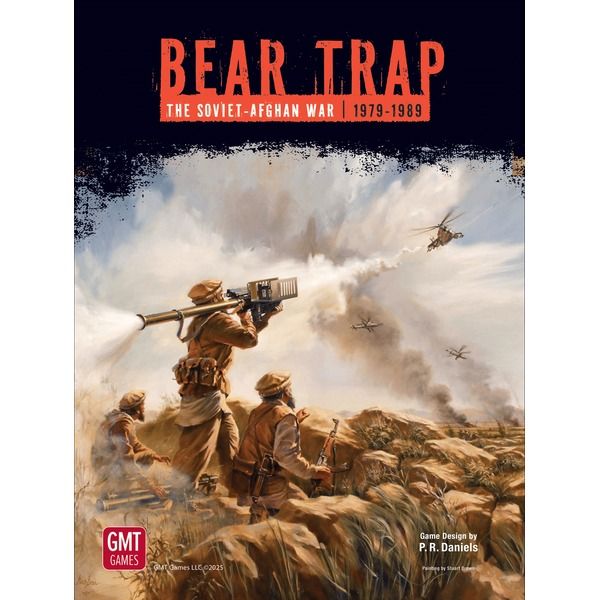
Bear Trap: The Soviet-Afghan War 1979-1989
€77,99
Pre-order
Price incl. btw (21%) €13,54
Bear Trap: The Soviet-Afghan War 1979-1989 GMT Games
In stock
1
Save this product for later
Bear Trap: The Soviet-Afghan War 1979-1989
Product Details
This is a pre-order. Expected on November 27th.
From the Publisher:
Bear Trap is a quick-playing, low-complexity 2-player block wargame covering the Soviet-Afghan War (1979-1989).
In the Soviet–Afghan war, Insurgent groups—including the mujahideen—fought a guerrilla war against the Soviet 40th Army and the Democratic Republic of Afghanistan (DRA) government. The game begins shortly after “Operation Storm-333” was executed at the end of 1979—in this coup, Hafizullah Amin (General Secretary of the People's Democratic Party of Afghanistan) was killed, and Babrak Karmal, a Soviet loyalist, replaced him. By putting the Brezhnev Doctrine into practice, the Soviets sought to prop up the sympathetic local government and “solve the Russian Ice-lock Problem” while the Insurgents sought to expel the secularist government and foreign invaders.
Although the two sides in this conflict were fundamentally different in a variety of ways, they also faced some parallel challenges. For instance, they struggled to maintain loyalty. For the Soviets and the DRA, the DRA armed forces merely offered an opportunity for a paycheck, and there were cases where conscripts in the Soviet Army defected to the Mujahideen (e.g. Kazbek Hudalov). For the Insurgents, propaganda, threats, and promises to family drew would-be combatants away, as did injuries suffered from landmines and attacks on villages. Both sides also struggled to puncture the fog of war, not being able to secure reliable intel about force deployment and strength. And both faced various challenges around supply, communication, and coordination. Both sides needed to react to shifting strategies and developments over this decade long Cold War proxy war, where the landscape upon which it was fought presented many unique challenges.
Sekigahara: The Ancestral Roots of Bear Trap
Bear Trap is a spiritual successor to Sekigahara—building on the same core system. In both games, each player has their own deck of cards; players spend cards from their hand to activate areas or in combat to commit units to battle. This means fans of Sekigahara will find learning Bear Trap easy, but the feel and experience of the games are highly divergent. In addition to the difference in topics covered, other differences include:
- In Bear Trap, forces are represented by blocks, stickered side hidden from the opponent, and the orientation of a block determines its disposition (i.e. the orientation of a block dictates whether it’s mobilized, fortified, disordered, poised to offer fire support to a battle initiated by friendly units, or ready to ambush enemy units). The orientation of a block also determines which battles it can join, whether card play is required to commit it to battle, and whether it can be moved or activated.
- Bear Trap features an area-based map, rather than the point-to-point style found in Sekigahara.
- The sequential combat system popularized in Sekigahara is utilized in Bear Trap, adapted to suit the setting. This includes the use of ‘loyalty challenges,’ making Bear Trap simulate the proneness of (for instance) Afghan forces to defect.
- Bear Trap is, like Sekigahara, first and foremost a 2-player game—but Bear Trap includes a unique solo mode, built around a card assisted flowchart bot.
- Bear Trap has fewer blocks than Sekigahara, and each player has fewer card types (‘suits’) in their decks.
- Bear Trapintroduces ‘strategy’ cards—powerful event cards. Although it would be misleading to label Bear Trap a deck-building game, players will add 2 cards from a pool specific to their side each time they reshuffle their deck.
Bear Trap is not a "clone" of Sekigahara—they are very different games with differences in topic, feel, and mechanism, despite having an underlying shared game system. Bear Trap is also a more asymmetric game than Sekigahara. AlthoughBear Trap is a slight step up in complexity (relative to Sekigahara), the mechanics remain simple, and Bear Trap can be completed in 2-3 hours.
Gameplay
One player takes command of the ruling Democratic Republic of Afghanistan and its forces, supported by the Soviet 40th Army—this side is referred to here as the Soviets, or the Soviet player. The other player takes command of the local tribal rebels (the Lashkar) and Mujahideen guerrilla fighters—this side is referred to here as the Insurgents or the Insurgent player. Hidden information on blocks and cards presents players with a host of difficult decisions throughout the game.
Each player has their own deck of cards, pool of blocks, and win conditions. The game ends as soon as one player satisfies their decisive victory condition or after players have reshuffled their decks a combined total of seven times (and the winner would be determined by assessing who has satisfied their minor victory condition).
On their turn, a player will do one of three things: (1) take a resupply turn—replenishing their hand of cards and bringing more blocks into play, (2) play cards from their hand to activate areas and possibly initiate combat, or (3) play a powerful ‘strategy’ card from their hand to resolve its effect. When a player needs to draw cards but has none left in their deck, they will complete the reshuffle process—by which they will choose and add two ‘strategy’ cards to their deck.
The Insurgent player aims to push the USSR—as a political entity and as a populace—beyond the level of Soviet losses and setbacks it is willing to endure. Meanwhile, the Soviet player seeks to establish a new status quo of control and authority over a period sufficient to claim ‘Mission Accomplished’ in Afghanistan (even if pockets of the country remain rebel held).
Initial setup is variable, keeping the game fresh. Concealed information—through the blocks and cards—lends uncertainty to help simulate the actual conflict.
Components
- 1 mounted gameboard
- 114 Cards
- 62 Wooden Blocks (32 Insurgent, 30 Soviet)
- 1 Sticker sheet
- 1 Sheet of Counters
- 1 Rulebook
- 1 Playbook (incl. tournament rules, optional rules, strategy guides, designer notes)
- 2 double-sided player aids (identical, 1 for each player)
- 3 double-sided solo aids (3 flowcharts and 1 board)
Time Scale: 16-20 months per Reshuffle
Unit Scale: 1 Block = 500 - 8,000 soldiers
Number of Players: 1 to 2
Play Time: 2 to 3 hours
Game Designer: P.R. Daniels, PhD
Game Developer: Joe Dewhurst
You May Also Like
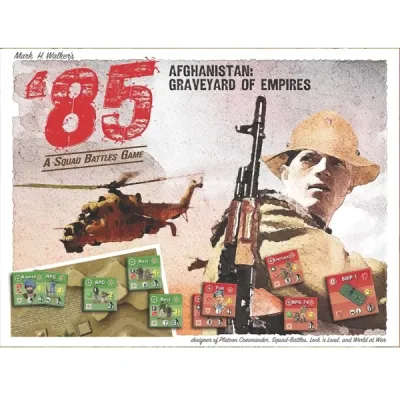
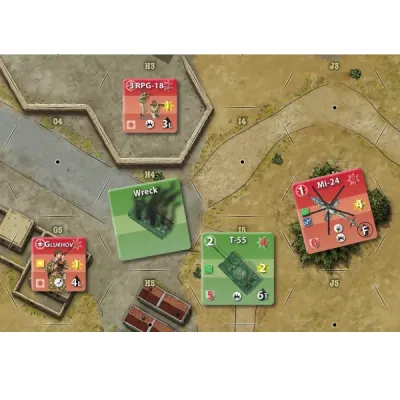
’85: Graveyard of Empires – Afghanistan
’85: Graveyard of Empires – Afghanistan
Fight Soviet vs Mujahideen squad-level battles in a card-driven Afghanistan wargame.
€86,99
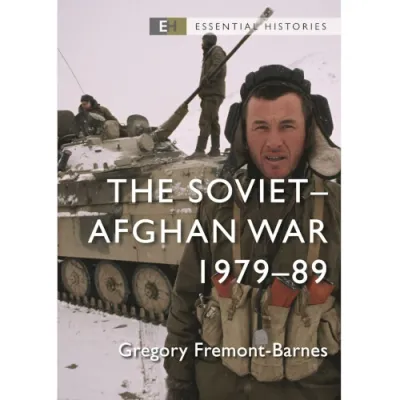
Essential Histories: The Soviet–Afghan War
Essential Histories: The Soviet–Afghan War
A concise illustrated history of the Soviet invasion of Afghanistan and its long consequences.
€13,99
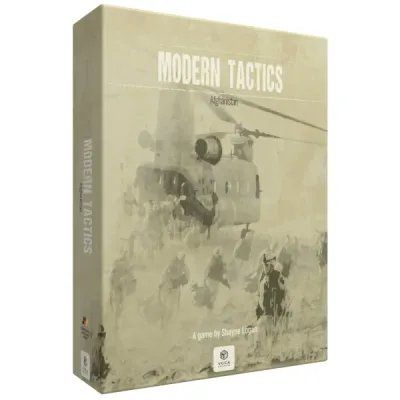
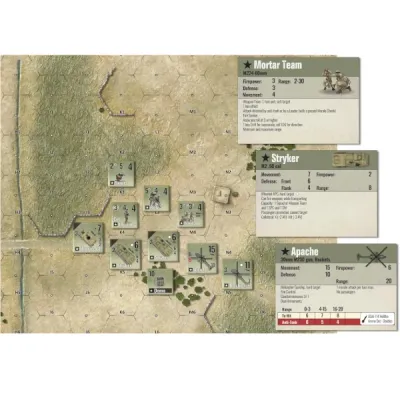
Modern Tactics #1: Afghanistan
Modern Tactics #1: Afghanistan
A platoon-level tactical wargame of coalition and insurgent firefights in Afghanistan from 2006–2009.
€114,99
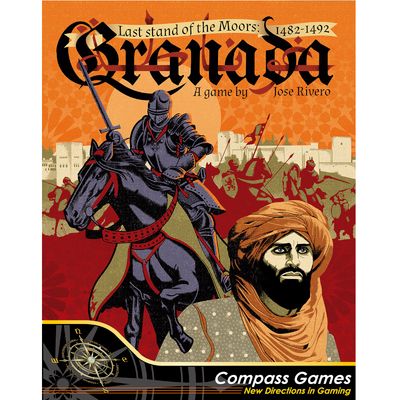
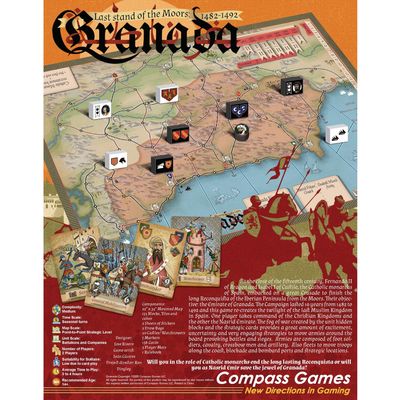
Granada: The Last Stand of the Moors 1482-1492
Granada: The Last Stand of the Moors 1482-1492
A Compass Games two-player block wargame on the final war for Granada and the end of Moorish rule in Iberia.
€87,99
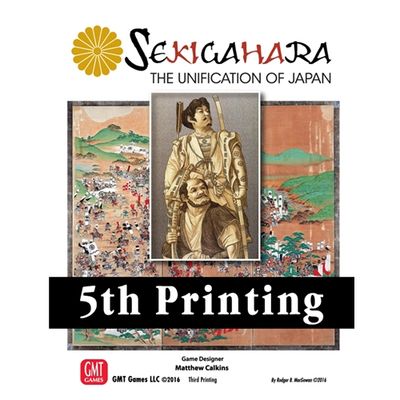
Sekigahara: The Unification of Japan 5th Printing
Sekigahara: The Unification of Japan 5th Printing
A tense two-player block game of loyalty, hidden forces, and the campaign that unified Japan.
€59,99
Display prices in:EUR